

Home battery storage is becoming an important part of the European solar market. As residential solar installations continue to grow, demand for reliable battery storage solutions is also increasing.
For solar installers, EPC contractors, distributors, wholesalers and private label brands, choosing the right battery supplier is an important business decision. Beyond battery capacity and price, factors such as inverter compatibility, product scalability, certifications and technical support can all affect project delivery and customer satisfaction.
So, what should you consider when selecting a home battery storage solution for your business?
Table of Contents
1. What Is Home Battery Storage and How Does It Work?
Home battery storage systems store electricity for later use. They are commonly integrated with solar panels and hybrid inverters to help households use more of the energy they generate.
During the day, solar panels produce electricity. After household consumption is covered, surplus energy charges the battery. When solar production decreases, the stored electricity can supply household loads.
For installers and EPC contractors, understanding this process is important when designing residential energy systems. A suitable configuration should consider:
- Solar panel generation capacity.
- Household electricity consumption.
- Battery charging and discharging power.
- Inverter specifications.
- Grid connection and backup requirements.
For distributors and wholesalers, understanding these technical factors also helps when recommending products to different installation partners.
2. How to Choose the Right Home Battery Storage Capacity?
Battery capacity should match the intended application and the household's energy consumption.
For residential solar projects, the following capacities can serve as general reference points:
| Battery capacity | Typical application |
|---|---|
| 5 kWh | Smaller homes and moderate energy consumption |
| 10 kWh | Standard residential solar storage projects |
| 12–15 kWh | Larger homes and higher electricity demand |
| 20 kWh or more | High-energy households and larger storage requirements |
These are indicative ranges rather than fixed project specifications.
For solar installers and EPC contractors, reviewing daily consumption, solar generation and expected backup loads is essential before finalising a system configuration.
For distributors and private label brands, offering modular battery solutions can make it easier to serve different market segments without maintaining too many completely different product configurations.
3. High-Voltage vs Low-Voltage Home Battery Storage
One of the main decisions when selecting residential battery products is choosing between high-voltage (HV) and low-voltage (LV) systems.
Both technologies are widely used in residential energy storage, but they have different electrical characteristics.
| Feature | High-voltage battery | Low-voltage battery |
|---|---|---|
| Typical voltage | Higher DC voltage | Commonly 48–51.2V |
| Current at equal power | Lower | Higher |
| Cable requirements | Generally smaller cables | Generally thicker cables |
| Application | Residential systems with compatible HV inverters | Residential systems with compatible LV inverters |
| Main consideration | Voltage range and inverter matching | Current limits and cable sizing |
Neither solution is automatically better. The choice depends on the inverter, project requirements and planned storage capacity.
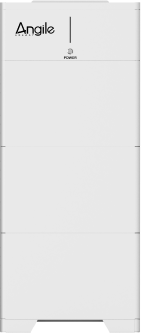
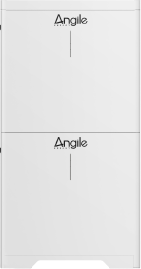
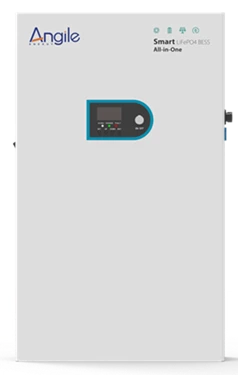
Angile Energy provides both high-voltage residential battery packs and low-voltage residential battery packs.
For installers, having both options provides greater flexibility when designing different residential projects. For distributors and wholesalers, it also helps build a product portfolio that serves different installation requirements.
4. What Should B2B Buyers Check Before Choosing a Battery Supplier?
Product specifications are only one part of supplier evaluation. Solar businesses should also consider the following factors.
1. Inverter compatibility
Check the battery voltage range, communication protocols and supported inverter models. Compatibility should always be confirmed before installation.
2. Battery chemistry and BMS
Lithium iron phosphate (LFP) is widely used in residential storage. An intelligent Battery Management System (BMS) helps monitor battery operation and provides essential protection functions.
3. Modular design and scalability
Stackable battery modules allow systems to expand as household energy requirements change. This is useful for installers handling different project sizes.
4. Certifications and market compliance
For the European market, check relevant safety, transport and grid-connection certifications. Requirements may vary between countries.
5. Technical support and supply capabilities
Distributors, wholesalers and EPC contractors should evaluate delivery arrangements, local technical support, product documentation and after-sales service.
Private label brands should also discuss OEM/ODM capabilities, product customisation and cooperation requirements directly with the manufacturer.
5. Why Consider Angile Energy for Home Battery Storage?
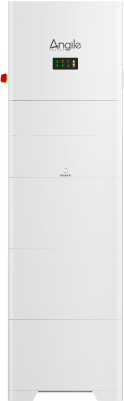
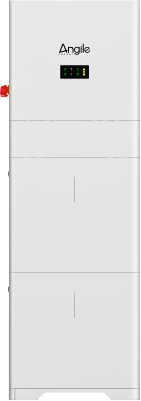
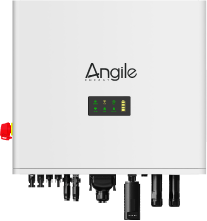
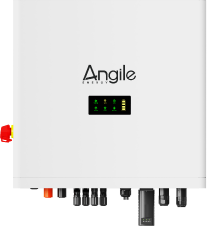
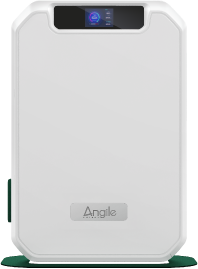
Angile Energy develops residential energy storage solutions, including hybrid inverters and stackable high-voltage and low-voltage battery packs.
Its ePowerCUB storage system uses 5.12 kWh battery modules and supports modular expansion. The product portfolio provides options for different residential storage configurations.
Angile Energy also develops its own PCS, BMS and EMS technologies, supporting integrated energy management and battery control.
For European business partners, Angile Energy offers several cooperation advantages:
- High-voltage and low-voltage residential battery options.
- Modular battery designs for different project requirements.
- European certifications for relevant markets.
- Local warehouse and technical support capabilities in several European countries.
- Cooperation with local installation partners.
- Support for distributors, wholesalers and private label business discussions.
Whether you are an installer looking for reliable battery products, an EPC contractor sourcing residential ESS solutions, or a distributor building your energy storage portfolio, choosing a manufacturer with suitable products and technical support is important.
Explore Angile Energy to learn more about its residential energy storage products and business cooperation opportunities.
Frequently Asked Questions About Low-Voltage Home Batteries
1. What is a low-voltage home battery?
A low-voltage home battery is a storage unit that operates at a relatively low DC voltage, commonly around 48V or 51.2V. It stores electricity from compatible solar and inverter systems for later use.
2. Are low-voltage batteries suitable for residential solar projects?
Yes. Low-voltage batteries can be used in residential solar storage projects when their capacity, output power and inverter compatibility meet the project requirements.
3. Can multiple low-voltage batteries be connected together?
Yes. Many residential battery systems support parallel connections to increase total storage capacity. However, installers must follow the manufacturer's requirements for battery matching, communication and connection limits.
4. Do low-voltage batteries work with all hybrid inverters?
No. Battery and inverter compatibility depends on voltage range, communication protocols and supported battery models. Installers and distributors should confirm compatibility with the manufacturer before recommending a configuration.
5. What should distributors consider when sourcing low-voltage batteries?
Distributors should evaluate battery quality, certifications, warranty, modular expansion, product documentation, supply stability and technical support. For private label projects, OEM/ODM capabilities and long-term cooperation conditions are also worth discussing.