

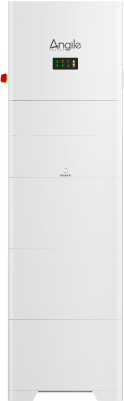
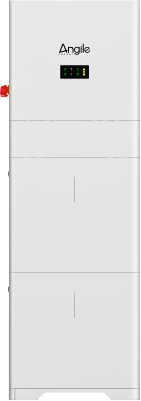
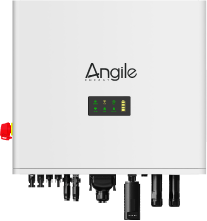
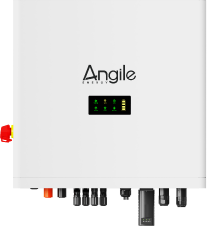
As winter approaches, keeping your home warm with solar energy can be a more cost-effective alternative to relying heavily on expensive natural gas. A PV inverter hybrid offers a practical way to manage solar generation, household electricity use and battery storage in one system, helping homeowners make better use of their solar power while reducing dependence on the grid.
But how does it work? Is it better than a traditional solar inverter? And should you choose a single-phase or three-phase model? Here is what homeowners should know.
Table of Contents
1. What Is a PV Hybrid Inverter?
A hybrid inverter combines the functions of a traditional solar PV inverter and a battery inverter. It converts DC electricity from solar panels into AC electricity for household appliances while also managing energy stored in a battery.
Unlike a standard PV inverter, which mainly converts solar electricity for immediate use or grid export, a hybrid inverter can store excess solar power for later.
For example, during sunny hours, your solar panels may generate more electricity than your home needs. Instead of sending all the surplus energy to the grid, a hybrid inverter can direct it into a connected battery. In the evening, the stored electricity can power your home.
This helps increase solar self-consumption and reduce reliance on grid electricity.
2. How Does a Hybrid PV Inverter Work?
A hybrid PV inverter manages electricity from three main sources: solar panels, batteries and the electricity grid.
Its operation is relatively simple:
- Solar generation: Solar panels produce DC electricity.
- Home consumption: The inverter converts DC into AC to power household appliances.
- Battery charging: Surplus solar energy charges the connected battery.
- Battery discharge: Stored energy supplies the home when solar generation is low.
- Grid connection: Electricity can be imported when solar and battery power are insufficient.
Depending on the system design, a hybrid inverter can also provide backup power during a grid outage. However, backup operation requires suitable inverter functionality and electrical installation.
3. Single-Phase vs. Three-Phase Hybrid Inverters
European homes have different electricity supply configurations. Choosing the correct inverter depends on the property's electrical connection, solar installation and power requirements.
| Comparison | Single-Phase | Three-Phase |
|---|---|---|
| Typical application | Smaller residential homes | Larger homes |
| Electrical supply | Single-phase | Three-phase |
| Common system size | 4–6 kW | 8–12 kW |
| Suitable applications | Everyday household loads | Higher power demand and larger solar systems |
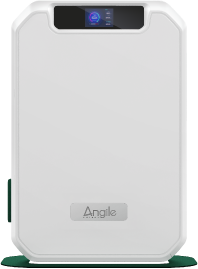
Angile Energy offers residential hybrid inverter options for both configurations.
Its single-phase hybrid inverter range includes 4 kW, 5 kW and 6 kW models, while its three-phase hybrid inverter range includes 8 kW, 10 kW and 12 kW models.
Explore the Angile Energy single-phase residential hybrid inverter and three-phase residential hybrid inverter to compare the available options.
4. Can a Hybrid Inverter Work with a Low-Voltage Battery?
Yes, but the inverter must support the battery's voltage range and communication requirements.
Low-voltage batteries, commonly around 48V nominal, are used in many residential energy storage systems. They can be a practical option for modular home battery installations.
Before choosing a battery, check three important points:
- Voltage compatibility: The battery voltage must match the inverter's supported range.
- BMS communication: The inverter and battery must communicate correctly through supported protocols such as CAN or RS485.
- Power capacity: Battery charging and discharging limits must meet the inverter's requirements.
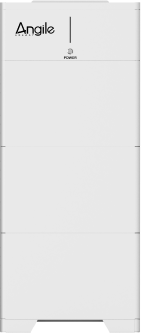
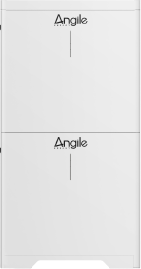
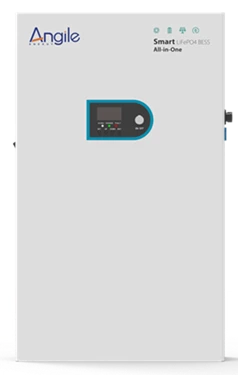
Angile Energy offers both high-voltage and low-voltage residential battery packs. Its hybrid inverter solutions are designed to work with compatible Angile Energy battery products. Always confirm the exact model combination before installation.
5. What Should You Consider Before Buying?
Before selecting a PV hybrid inverter, consider the following factors:
- Inverter capacity: Match the inverter size with your solar panel output and household electricity demand.
- MPPT performance: Check the number of MPPT trackers and PV input specifications, especially if your roof has different orientations.
- Battery compatibility: Confirm supported battery voltage, capacity and communication protocols.
- Backup capability: Check backup output, overload capacity and transfer time if power continuity is important.
- Local certification: Make sure the inverter meets the grid connection requirements in your European country.
Angile Energy's residential hybrid inverters include remote firmware upgrades, reverse power flow protection, up to 150% PV oversizing support and a 5-year inverter warranty.
For homeowners planning to add battery storage, a hybrid inverter can also provide more flexibility than installing a conventional PV inverter alone.
Frequently Asked Questions
1. What is the difference between a PV inverter and a hybrid inverter?
A standard PV inverter converts solar DC electricity into AC electricity. A hybrid inverter also manages battery charging and discharging, allowing excess solar energy to be stored.
2. Can I connect any 48V battery to a hybrid inverter?
No. Matching voltage does not guarantee compatibility. You must also check the battery's operating voltage, charging limits, BMS communication and manufacturer-approved compatibility.
3. Is a low-voltage battery suitable for home energy storage?
Yes. Low-voltage batteries can provide modular residential storage. The right choice depends on the inverter, household power demand and required storage capacity.
4. Are low-voltage and high-voltage batteries interchangeable?
No. They operate within different voltage ranges and require compatible inverter connections. Always select the battery type supported by your inverter.
5. Does a hybrid inverter work without a battery?
Some hybrid inverters can operate without a battery, but this depends on the model. Check the manufacturer's specifications before purchasing.
Looking for a Residential Solar Storage Solution?
Looking for a suitable residential solar storage solution? Visit Angile Energy to explore hybrid inverters and compatible home battery storage systems.