
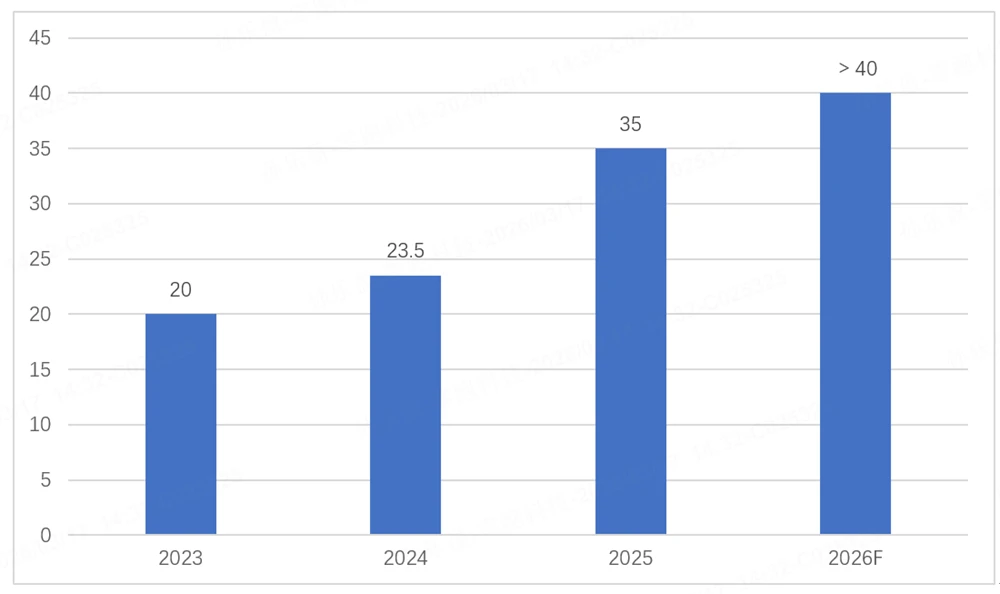
The global residential energy storage market is experiencing a period of robust growth. According to preliminary statistics from InfoLink, global residential energy storage shipments reached approximately 35.11GWh in 2025—a significant year-on-year increase of nearly 75.55%.
Market projections suggest this momentum will continue, with shipments expected to exceed 40GWh in 2026. Following a period of inventory adjustments, the industry has entered a new phase of demand release. Notably, certain regional markets are seeing "explosive" growth, largely fueled by supportive government policies.
At Angile Energy, we help homeowners understand how energy storage works and how to choose the right system for their needs. In this guide, we’ll explain what residential energy storage is, how it works, the benefits it offers, and what homeowners should know before installing a battery system.
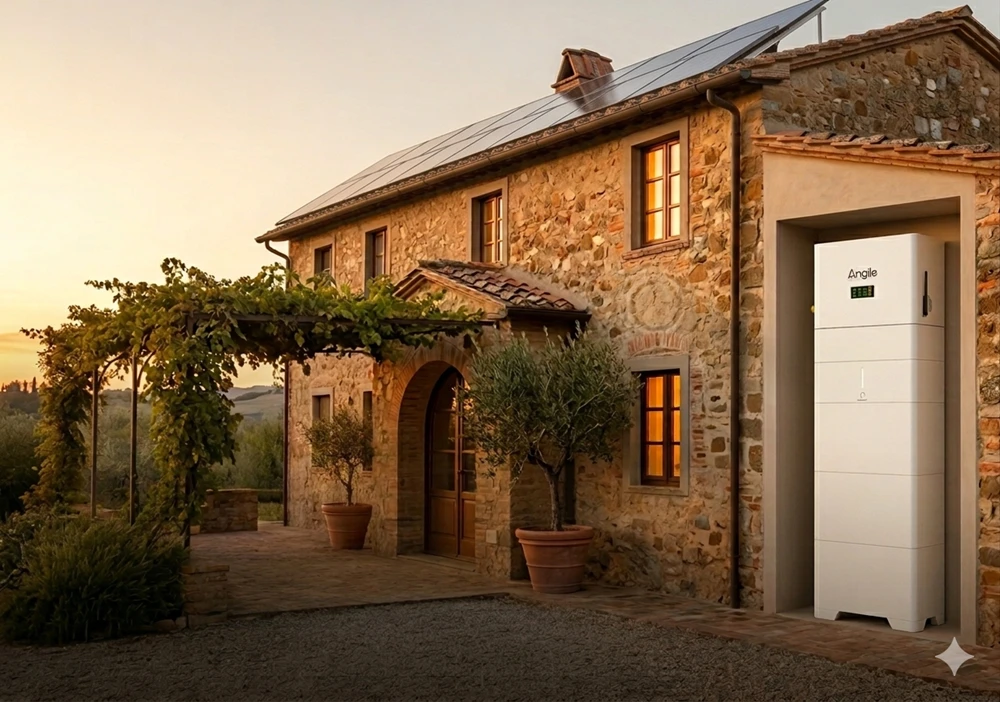
Residential energy storage refers to a home battery system that stores electricity for later use. These systems are commonly paired with solar panels, but they can also charge directly from the utility grid.
A typical home battery system stores excess electricity generated during the day and makes it available when:
In simple terms, residential energy storage allows homeowners to use electricity when it is most valuable rather than only when it is generated.
A simplified energy flow looks like this:
Solar Panels → Home Loads → Battery Storage → Backup or Grid Use
A residential energy storage system usually consists of solar panels (optional), battery modules, an inverter, energy management software, and a backup electrical panel. Here’s how the process works:
During daylight hours, solar panels produce electricity for your home. If your home uses less electricity than the solar system produces, the excess energy can either be sent to the utility grid or be stored in the battery system.
The battery stores unused electricity chemically until it is needed. Most modern residential systems use lithium-ion battery technology because it offers::
When solar production decreases, the battery automatically supplies electricity. This helps homeowners reduce utility costs, avoid peak pricing, and maintain power during outages.
One of the biggest reasons homeowners install battery systems is backup power protection. When the grid goes down, the battery system disconnects from the utility and continues powering selected home circuits. Common backup loads include refrigerators, Wi-Fi, lighting, security systems and medical equipment.
However, backup duration depends on several critical factors:
For example:
| Appliance | Approximate Runtime (10 kWh Battery) |
|---|---|
| Refrigerator | 24–40 hours |
| Wi-Fi + Lighting | Several days |
| Central AC | A few hours |
| Essential Loads Panel | 1–2 days |
Battery capacity is measured in kilowatt-hours (kWh), which represents how much energy the system can store. Common sizes include:
A simplified storage relationship is:
Runtime = Battery Capacity (kWh) / Home Energy Usage (kW)
For example:
Many utility companies now use Time-of-Use (TOU) pricing, where electricity costs more during peak demand hours. Battery systems allow homeowners to:
This strategy is called peak shaving or load shifting.
Unlike traditional generators, battery systems:
This makes them ideal for homeowners seeking reliable emergency backup power.
Residential storage reduces dependence on the utility grid by allowing homeowners to produce and consume more of their own electricity. While most systems are not fully off-grid, they significantly improve energy resilience and self-consumption.
Without batteries, excess solar energy is often exported back to the grid. With storage, homeowners can:
Most residential battery systems are designed to last:
Several factors affect lifespan: battery chemistry, temperature, charging behavior, and daily cycling frequency. Many manufacturers also provide 10-year warranties and capacity retention guarantees.
Battery systems are not 100% efficient because some energy is lost during charging and discharging. Most modern systems operate at 85–95% round-trip efficiency.
That means if 10 kWh enters the battery, about 8.5–9.5 kWh may be usable later. A simplified efficiency relationship is:
Usable Energy = Stored Energy x Efficiency
The cost of a residential energy storage system in Europe depends on several factors, including battery capacity, backup power capability, installation complexity, electrical system upgrades, solar panel integration, and local labor and permitting costs.
In many EU countries, a typical home battery system usually costs between €8,000 and €20,000+ including installation. Smaller systems for basic self-consumption are generally more affordable, while larger hybrid systems with full-home backup cost more.
Government incentives in countries such as Germany, Italy, and France can also help reduce the total investment cost. Modern integrated solutions from companies like Angile Energy are designed to simplify installation and improve long-term energy efficiency for homeowners.
For many homeowners, residential energy storage can be a smart long-term investment. However, the value depends on several factors, including local electricity prices, utility rate structures, solar production, and how much energy the home uses each day. In areas with high electricity costs or frequent power outages, battery storage can provide noticeable savings and greater energy reliability.
Battery systems are often most beneficial for homeowners who already have solar panels. Instead of sending excess solar energy back to the grid, the battery stores that energy for use at night or during outages. Homes with Time-of-Use (TOU) electricity pricing can also save more by using stored energy during expensive peak hours instead of buying electricity from the utility company.
Residential energy storage is especially valuable for people who want more energy independence and backup protection. Homeowners who experience regular outages, plan to stay in their homes for many years, or want greater control over their energy usage often see the greatest benefits from installing a battery system.
Before installing a home battery system, homeowners should carefully evaluate several factors, including:
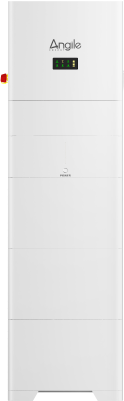
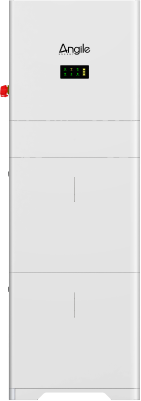
At Angile Energy, we provides integrated residential energy storage solutions that combine hybrid inverters, battery systems, and smart energy management into a integrated platform. These solutions are designed to help homeowners improve energy independence, optimize electricity usage, and support long-term sustainable living.
Residential energy storage is becoming a central part of modern home energy systems. As utility pricing evolves and homeowners seek greater resilience, battery systems are expected to play a larger role in:
For many homeowners, energy storage is no longer just a backup solution — it is becoming a smarter way to manage electricity every day.
Residential energy storage gives homeowners greater control over how and when electricity is used. By storing energy for later use, battery systems can lower electricity costs, improve backup protection, increase solar self-consumption, and support greater energy independence.
As technology continues improving, home battery systems are becoming more efficient, more scalable, and more accessible than ever before. If you’re considering adding battery storage to your home, Angile Energy can help you evaluate the right solution for your energy goals.
Smart, Scalable, and Reliable Energy Storage Systems
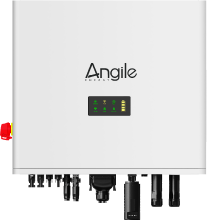
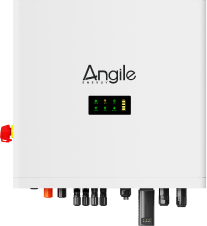
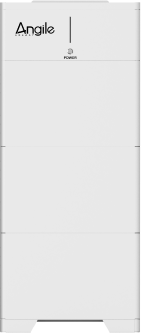
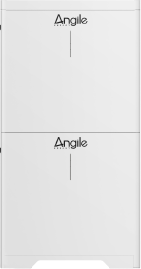
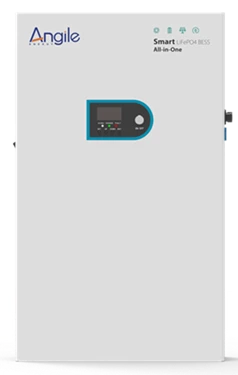
Angile’s residential energy storage solutions are built around 5kW–12kW hybrid inverters (PCS), compatible with both low-voltage (such as 51.2V) and high-voltage battery packs.
Users can start with a compact 5kWh setup and easily expand the system to 20–30kWh or more through modular battery additions.
The system supports off-grid operation, intelligent monitoring, and remote firmware upgrades, helping homeowners achieve greater energy independence and smarter energy management.
For commercial and industrial applications, Angile offers standardized outdoor liquid-cooled all-in-one cabinets in two main configurations: 105kW / 233kWh and 250kW / 500kWh.
These systems utilize high-performance Lithium Iron Phosphate (LFP) battery cells operating on a high-voltage platform of approximately 700–900V, while connecting to a 380V low-voltage distribution grid.
The “single cabinet as a power station” design ensures fast deployment and allows multiple cabinets to operate in parallel for larger-scale energy storage requirements.
For MW/MWh-scale projects, Angile adopts customized containerized integration solutions by combining multiple 250kW / 500kWh standard units into large-scale systems.
This highly integrated architecture enables rapid deployment and reliable operation for grid-level applications such as:
• Grid peak shaving and frequency regulation
• Renewable energy integration
• Utility-scale energy management
The solution provides scalability, operational efficiency, and strong support for modern smart grids.