
The energy storage industry is undergoing a seismic shift. As the world accelerates its transition away from fossil fuels, storage technologies have evolved from niche solutions into cornerstone infrastructure. This evolution has been further intensified by recent geopolitical instability; for instance, the EU may revive 2022 energy crisis measures in response to the Iran war. This highlights the critical need for a diversified storage portfolio.
Here are the top 10 trends shaping the global energy storage landscape in 2026.
Lithium-ion battery pack prices fell below $100/kWh for the first time in 2024, and by 2026, utility-scale pricing has pushed toward $75–80/kWh. BloombergNEF projects cumulative installed energy storage capacity to reach 411 GW / 1,194 GWh globally by 2030 — a trajectory being pulled forward by relentlessly falling costs.
|
Year |
Cell Price ($/kWh) |
Pack Price ($/kWh) |
Total Price ($/kWh) |
|
2013 |
568 |
259 |
827 |
|
2014 |
498 |
236 |
734 |
|
2015 |
318 |
157 |
475 |
|
2016 |
266 |
99 |
365 |
|
2017 |
192 |
81 |
273 |
|
2018 |
161 |
63 |
224 |
|
2019 |
136 |
58 |
194 |
|
2020 |
126 |
43 |
169 |
|
2021 |
122 |
37 |
159 |
|
2022 |
136 |
34 |
170 |
|
2023 |
114 |
34 |
148 |
|
2024 |
78 |
40 |
118 |
|
2025 |
74 |
34 |
108 |
Data Source: BNEF’s 2025 Lithium-Ion Battery Price Survey
Note: Historical prices have been updated to reflect real 2025 dollars. Weighted average survey value for 2025 includes 320 data points from passenger cars, buses, commercial vehicles, two- and three-wheelers and stationary storage. In EVs, the packs consist of cells, module housing, battery management system (BMS), wiring, pack housing and thermal management system. For stationary storage, we consider the battery rack, which holds stacked cells, modules, or packs, including the BMS, wiring and the rack housing.Utility-scale deployments are no longer pilot projects — they're grid policy. The most structural shift is occurring in Europe, where storage has moved from an "incentivized" asset to a legally mandated grid component. By the July 2026 deadline, all EU Member States must submit Flexibility Needs Assessments under the updated Electricity Market Design (EMD) rules, forcing national governments to set concrete storage targets to ensure grid stability.
Four-hour batteries aren't enough. In 2026, technologies capable of storing energy for 8–100+ hours are receiving serious capital. The LDES Council estimates the market needs 1.5–2.5 TW of long-duration capacity by 2040. Iron-air batteries, compressed air, flow batteries, and gravity storage are all competing for that prize — with several projects now operating at commercial scale.
CATL and BYD began commercial production of sodium-ion batteries in 2023–2024, and 2026 marks their mainstream arrival. Sodium-ion cells offer comparable energy density to LFP (lithium iron phosphate) for stationary storage, with zero dependence on lithium or cobalt. Analysts expect sodium-ion to capture 10–15% of stationary storage installations by 2027, easing supply chain pressure on lithium.
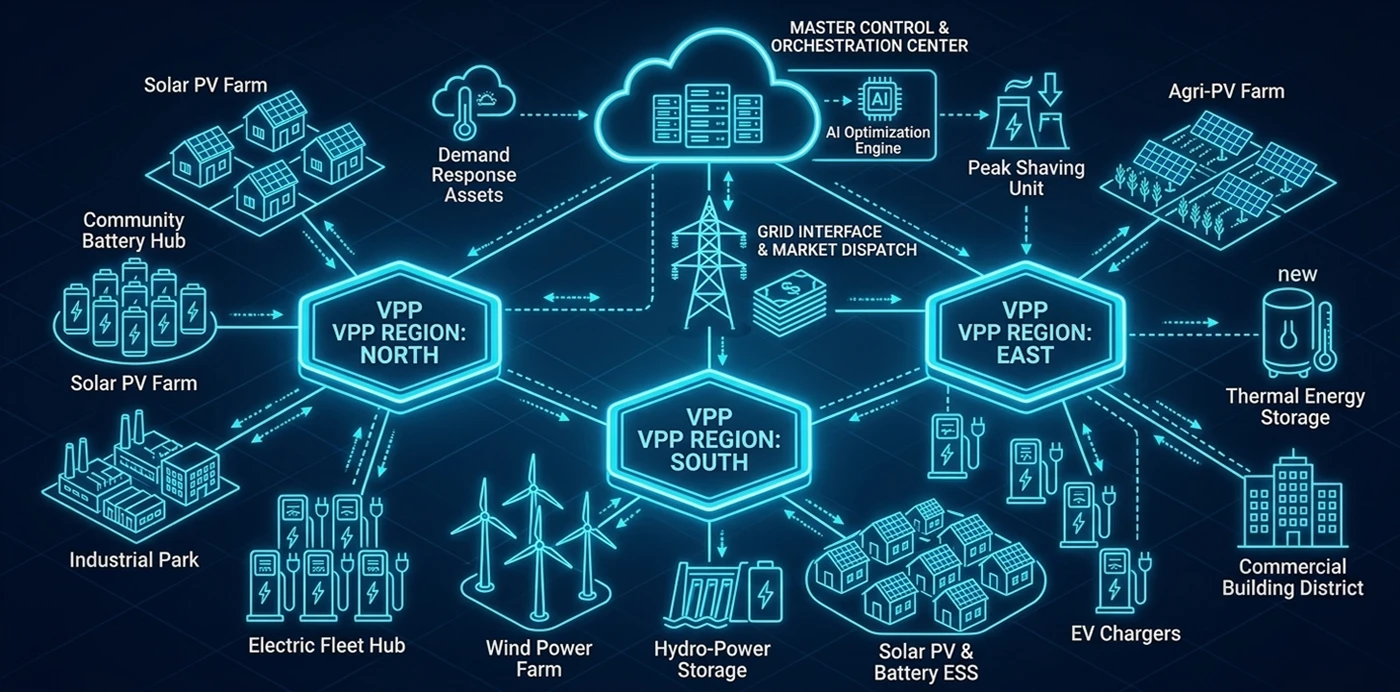
Distributed energy storage — EVs, home batteries, commercial systems — is being aggregated into virtual power plants that can dispatch gigawatts of flexible capacity on demand. Australia's network of VPPs already manages hundreds of megawatts. In the U.S., utilities and aggregators are enrolling millions of devices. By 2026, VPPs represent one of the fastest-growing segments in energy storage, with global capacity projected to exceed 5 GW.
This trend is particularly evident in Germany, which has solidified its position as Europe’s VPP leader. Leveraging its massive installed base of residential batteries, German aggregators like Next Kraftwerke and Sonnen are now managing over 15,000 decentralized units within a single network. In early 2026, these platforms successfully transitioned from simple frequency response to "cross-market optimization," allowing household batteries to trade energy in real-time on the wholesale market. This shift has been accelerated by the German government’s 2026 Power Plant Strategy, which increasingly views these "digital plants" as a viable, carbon-free alternative to traditional gas-fired peaking stations.
Vehicle-to-grid (V2G) technology is crossing from concept to commercial reality. With over 40 million EVs on the road globally in 2026, the potential storage reservoir parked in driveways is staggering — estimated at over 2 TWh of accessible capacity. Nissan, Ford, and Volkswagen have all launched V2G-enabled vehicles, and several European utilities now offer revenue-sharing programs for EV owners who participate.
Energy storage systems are increasingly managed by machine learning algorithms that predict demand, spot prices, and renewable generation simultaneously. Studies show AI-optimized battery dispatch can improve revenue by 15–25% compared to rule-based systems. In 2026, most new utility-scale projects are contracted with software-as-a-service optimization layers baked into the deal.
The geopolitical shocks of 2022–2024 exposed dangerous concentration in battery supply chains — particularly around Chinese processing of critical minerals. In response, the U.S., EU, and India are investing tens of billions in domestic cell manufacturing. The U.S. Department of Energy's loan program has backed over $20 billion in domestic battery projects. By 2026, North American and European cell production capacity has roughly doubled from 2022 levels.
Not every storage problem requires a battery. Molten salt thermal storage is proving its value alongside concentrated solar power, with projects in the Middle East storing energy for 10–14 hours at sub-$50/kWh levelized cost. Meanwhile, green hydrogen — while still expensive — is carving out a role in seasonal storage and heavy industry, with over 100 GW of electrolyzer capacity announced globally.
Sub-Saharan Africa, Southeast Asia, and parts of Latin America are building energy infrastructure with storage at the center — skipping the centralized fossil-fuel grid model entirely. In 2025, solar-plus-storage systems became cheaper than diesel generation in over 50 countries. The World Bank and development finance institutions have committed more than $8 billion toward storage-enabled clean energy access in emerging economies through 2027.
Energy storage in 2026 isn't a single technology — it's an ecosystem. From grid-scale lithium banks to sodium-ion cells, V2G networks, and AI dispatch engines, the industry is diversifying fast. What unites all ten trends is a common driver: storage is now the enabling layer for the entire energy transition. The projects that get built, the grids that stay reliable, and the markets that attract investment will increasingly be the ones that get storage right.
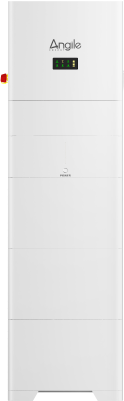
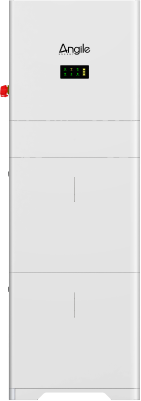
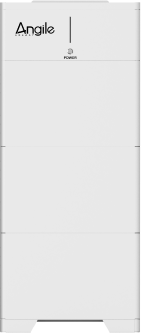
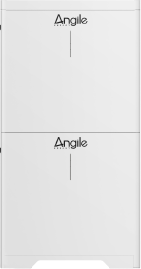
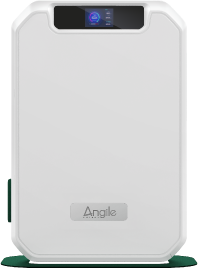
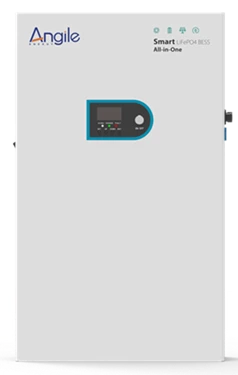
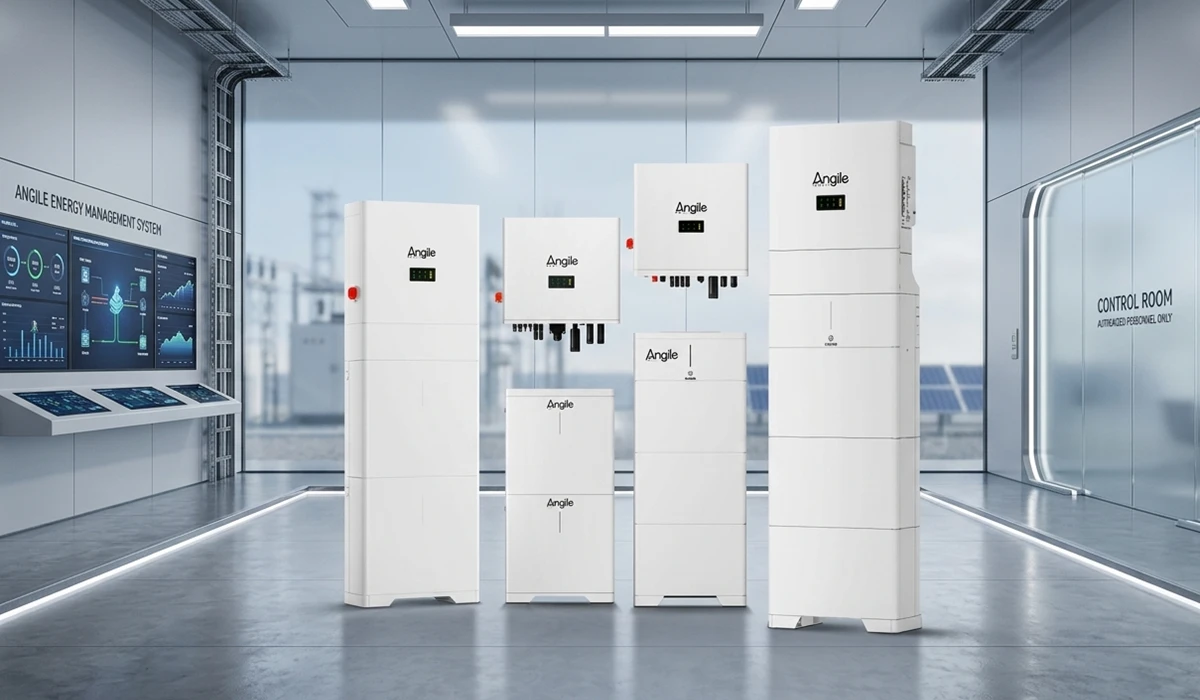
That's exactly where Angile Energy comes in. Specializing in HEMS and C&I energy solutions, Angile Energy helps homes and businesses stay ahead of this shift — using ESS and Virtual Power Plants (VPP) to optimize solar, storage, and grid interaction for maximum energy value. In a world where getting storage right is everything, Angile Energy delivers the smart, efficient, and sustainable power management to make it happen.