
The Netherlands is facing unprecedented grid congestion (netcongestie) due to rapid solar adoption, growing EV usage, and overloaded local transformers. In many regions, homeowners experience:
Inverter shutdowns during peak solar hours
Curtailment when there is no export capacity
Refusal or delay of new grid connection requests
Lower compensation for returned electricity due to excess supply
These challenges reduce the value of PV installations and limit the benefits households expect from solar power. A smart home battery is now one of the most effective and accessible solutions for everyday homeowners.
Grid operators like Liander, Enexis, and Stedin report that local cables and transformers cannot handle the increasing bi-directional energy flows. Congestion is especially severe in:
Noord-Holland
Noord-Brabant
Limburg
Flevoland
Groningen
When the grid reaches its maximum capacity, solar systems are forced to stop exporting. This results in significant energy waste and lower financial returns.
Instead of exporting excess solar power to the congested grid, the battery stores it instantly.
Outcome:
Your inverter keeps running normally
No energy is wasted
Higher self-consumption and system efficiency
Without a battery, curtailment reduces the annual output of PV systems by 10–30% in congested areas.
With a battery, households maintain full usage and protect their long-term investment.
If the grid operator limits your export capacity or denies your request:
A home battery provides your own buffer
You rely less on grid export
Solar remains fully usable even with limited capacity
Modern Dutch homes increasingly run on:
Heat pumps (3-phase)
EV chargers (11/22 kW)
Induction cooking
Home automation
A three-phase battery smooths these loads, reduces peak demand, and ensures stable power.
Most Dutch homes with solar and EVs use three-phase connections.
A three-phase ESS ensures:
Balanced load across phases
Compatibility with heat pumps
Faster charging
Higher safety and system efficiency
This makes three-phase batteries the new standard in the Dutch market.
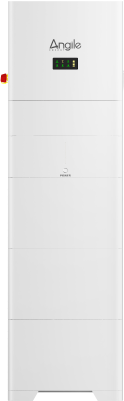
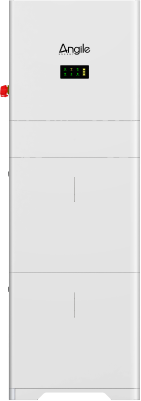
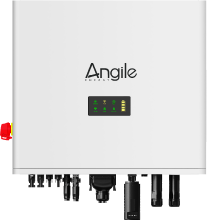
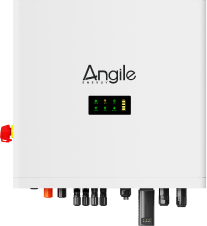
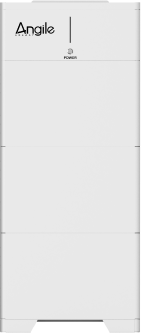
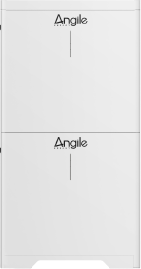
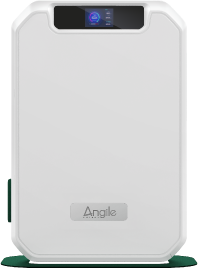
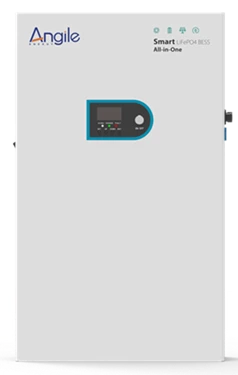
Angile Energy’s ePowerCUBE AIOT series is designed exactly for markets facing congestion challenges.
Key features include:
Ensures stable and balanced power for Dutch high-load households.
Allows homeowners to scale capacity based on real needs.
Captures solar instantly and prevents curtailment even during extreme peak hours.
Optimizes:
Self-consumption
Load shifting
Dynamic EV charging
Smart home integration
Provides uninterrupted power during micro-outages and grid instability.
Installing a home battery helps households:
Avoid solar power waste
Maintain inverter operation all year
Reduce dependence on grid export
Improve energy self-sufficiency
Lower electricity costs
Increase overall home resilience
The system becomes even more valuable when combined with dynamic energy tariffs and EV charging.
Grid congestion in the Netherlands is no longer only an industrial problem—it now affects homeowners every day. A three-phase home battery provides a smart, effective, and future-proof solution that protects the value of solar systems and supports energy independence.
The ePowerCUBE AIOT Series is engineered to help Dutch households overcome congestion challenges and maximize their renewable energy investment.