
You’ve invested in solar panels to cut your electricity bills and do your bit for the planet. But there’s a nagging problem you might have noticed: during the day, your panels often produce more power than you can use, and when evening comes and you turn on the AC, cook dinner, or charge your EV, you end up buying expensive grid power again.
That’s like filling a bucket with a hole in it.
Now imagine keeping all that extra solar energy in your own “power bank” and using it whenever you want — at night, on cloudy days, or during a blackout. That’s exactly what adding a home battery does.
You don’t need to rip out your existing solar system. In fact, more than 99% of residential solar setups can be retrofitted with battery storage without starting from scratch.
In this guide, we’ll walk you through everything you need to know — How to Add Battery Storage to Your Solar System Without Starting from Scratch. Let’s get started.
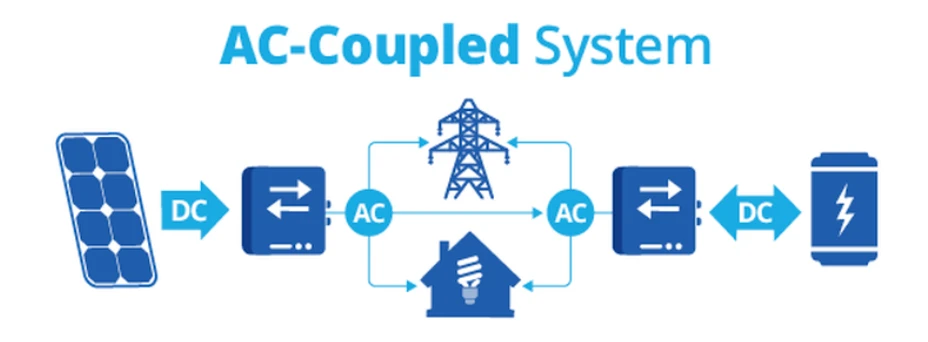
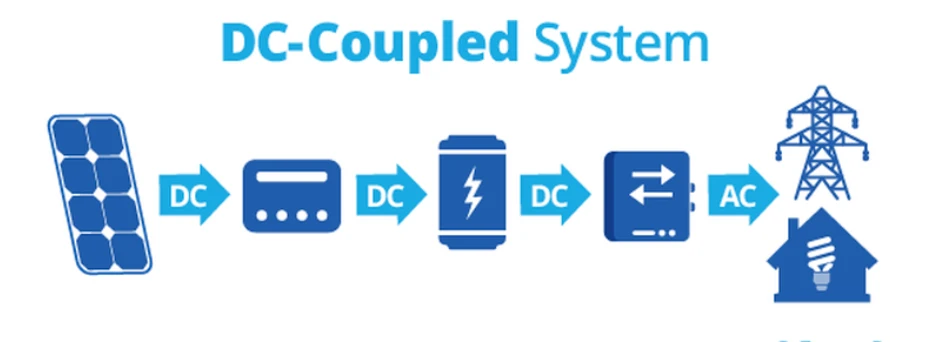
When you add a energy storage battery to an existing solar system, you have two main technical paths. The table below gives you a quick overview, then we’ll dive deeper.
| Feature | AC Coupling (recommended for most retrofits) | DC Coupling |
| Compatibility | Works with nearly any solar inverter (any brand, any age) | Requires replacing your old inverter with a hybrid inverter |
| Installation | Simple self-installation | More complex, often requires re-wiring and panel upgrades |
| Round‑trip efficiency | ~90-94% | ~95-97% |
| Best for | Homeowners who already have solar and want a hassle-free upgrade | New systems or when your existing inverter is already failing |
| Cost | Lower upfront, minimal labour | Higher due to inverter replacement |
AC coupling means the battery system sits between your solar inverter and your home’s electrical panel. It has its own independent battery inverter. The original solar inverter keeps working exactly as before.
Advantages you’ll love:
The only small trade‑off is efficiency: because electricity goes from solar → AC → battery (converted to DC for storage) → back to AC for your home, you lose about 6‑10% of the energy. But since that energy would otherwise be sold to the grid for pennies, the loss is financially insignificant.
If your solar inverter is already 8‑10 years old and showing signs of age (error messages, reduced output), replacing it with a modern hybrid inverter might make sense. A hybrid inverter manages both solar panels and battery in one box, achieving slightly higher efficiency.
Let’s break down the process into manageable steps. No technical degree required.
First, gather three things:
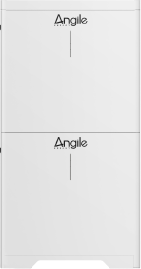
Pro tip: Most homes use 10‑15 kWh of electricity between sunset and sunrise. A 5‑10 kWh battery covers most of that, but with Angile Energy's stackable battery pack, you can add more capacity later if your energy usage grows.
Look for three key features when shopping for a battery:
✅ Compatibility – Confirms it works with your existing inverter (or with a new hybrid solar inverter you plan to install).
✅ LFP chemistry – Safer, longer life (6,000+ cycles, typically 10+ years), and thermally stable.
✅ Smart energy management – The battery should automatically charge from excess solar and discharge during high‑tariff periods.
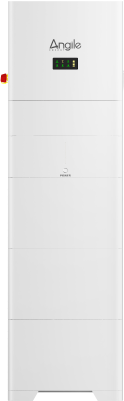
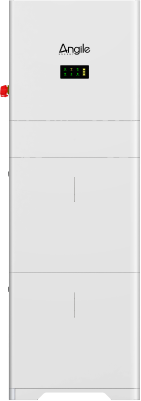
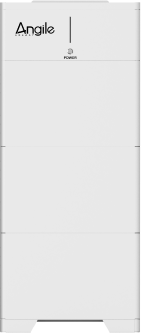
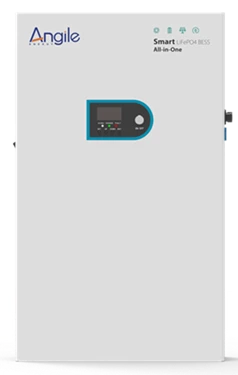
Angile Energy’s all-in-one integrated energy storage system includes a hybrid inverter, battery packs, and an EMS. It's easy to install and an excellent choice.
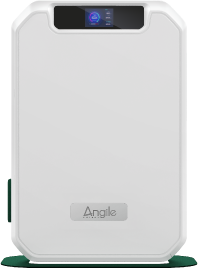
High‑voltage DC and grid connections require a licensed electrician. For balcony battery storage with inverter power below 800W, you don’t need a professional installer.
The process (1 day for AC coupling):
Permits & utility notification: Depending on your state/country, you may need to submit an updated single‑line diagram to your utility. Reputable installers handle this for you.
Once installed, you’ll use a smartphone app to see:
Set up TOU (Time‑of‑Use) mode if your utility has different day/night rates. For example:
4 PM – 9 PM (peak rate): Run the home from battery.
After 9 PM (off-peak): Let the battery recharge from the grid only if rates are very low.
This simple automation can double your savings compared to just “solar self‑consumption.”
1. Lower Electricity Bills
Without a battery, a typical solar home uses only about 30‑40% of the energy it produces. The rest is exported for a low feed‑in tariff. With a properly sized battery, you can push self‑consumption above 80% – meaning you’re paying for far less grid power.
2. Reliable Backup Power During Outages
Grids are getting less stable due to extreme weather and ageing infrastructure. When a blackout happens, your solar alone will not power your home (it shuts down for safety reasons). A battery with islanding capability changes that.
Essential loads – fridge, lights, Wi‑Fi, phone chargers, and even a medical device – keep running seamlessly. Angile Energy batteries switch to backup mode in less than 20 milliseconds, so you won’t even notice a flicker.
3. Maximise Your Solar Investment
Think of your solar panels as a revenue asset. Every kWh you store and use yourself is worth 3‑4 times more than selling it to the grid. Adding battery storage is like finally installing the second half of your solar system – the half that works at night.
Q: Will adding a battery void my existing solar inverter warranty?
A: No. With AC coupling, the original inverter is untouched. It continues to operate exactly as before. Only the new battery and its inverter are added.
Q: How long do home batteries last?
A: Modern LFP batteries (like those from Angile Energy) have a cycle life of over 10,000 cycles and come with a 10‑year warranty, so the batteries can last more than 10 years.
Q: Can I add a battery myself?
A: Battery installation involves high‑voltage DC and grid interconnection. Always use a licensed electrician or certified solar installer.
Q: What happens if I move house?
A: You can either include the battery as part of the home sale (increasing property value) or have it de‑installed and reinstalled at your new home. Many batteries are designed for easy relocation.
Q: Does the battery work during a power outage at night?
A: Yes – if the battery has charge stored. Our systems automatically reserve a user‑adjustable percentage (e.g., 20%) for backup, so you’re never caught empty when an outage hits.