Table of Contents (Click to expand)
Why your solar system choice matters
Not all solar systems work the same. The key difference is how they connect to the grid and if they use batteries.
-
Some systems help you save money
-
Some let you be fully independent
-
Some do a bit of both
Knowing these differences will help you choose the right system before you spend your money. A good choice can lower your bills, improve energy security, and match your daily power needs.
1. On-Grid Solar System (Grid-Tied)
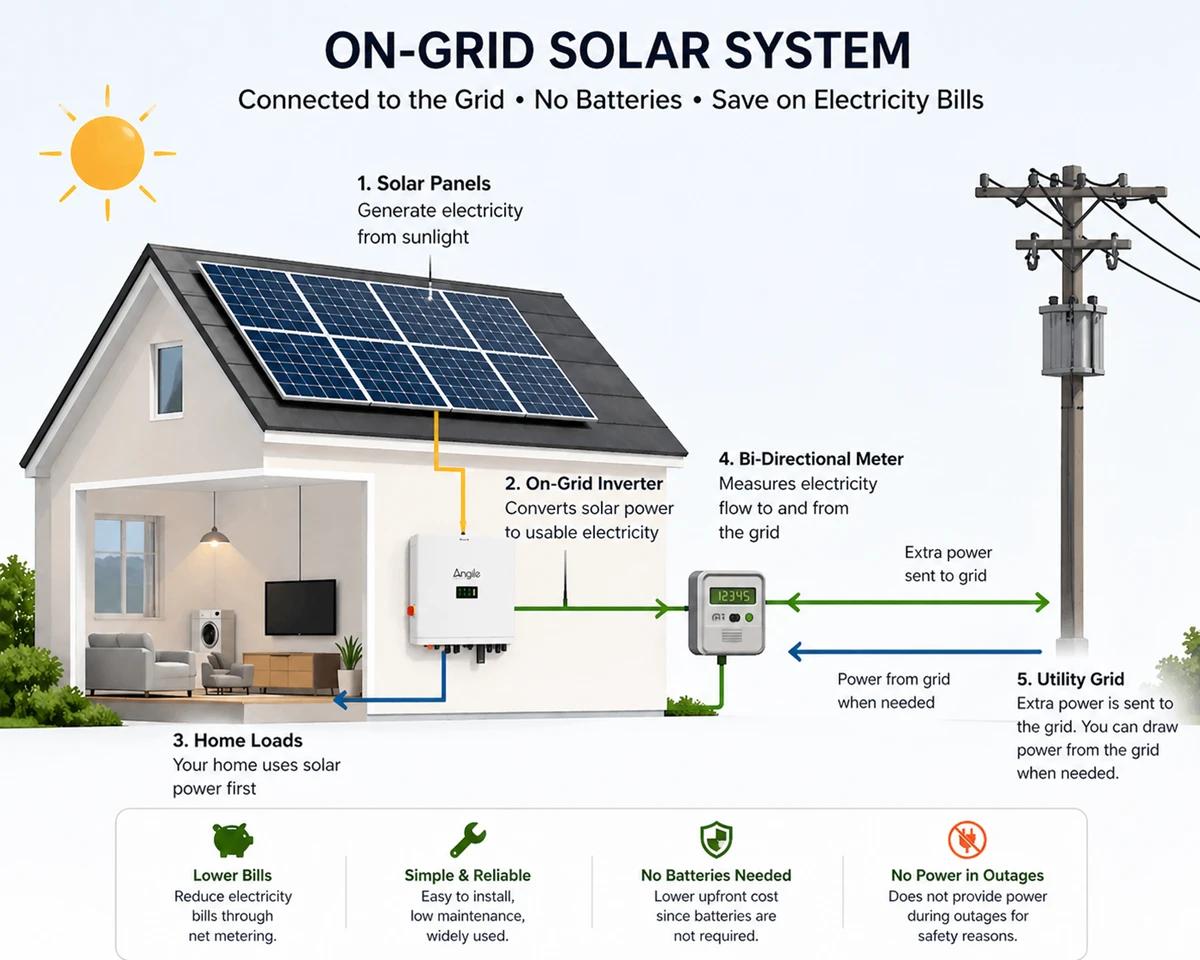
An on-grid solar system is connected to your local electricity grid. It works together with the utility to power your home.
How it works
-
Solar panels generate power during the day.
-
Your home uses solar energy first.
-
Extra electricity is sent back to the grid.
-
At night or on cloudy days, you use power from the grid.
Pros
-
Lower upfront cost: Because no batteries are needed.
-
Bill reduction: Can reduce electricity bills through net metering.
-
Simple maintenance: A straightforward system that is easy to maintain.
-
Reliability: The grid supports your power needs consistently.
-
Urban compatibility: A good choice for homes in cities or areas with stable power.
Cons
-
No power during outages: For safety reasons.
-
Grid dependence: Depends on grid availability.
-
Variable savings: Savings depend on local policies and electricity rates.
-
Less control: Less control over your energy use compared to battery systems.
Best for
-
Homes in cities where power is stable and rarely goes out
-
People who want to lower their electricity bills
-
Families looking for a simple and affordable solar option
-
Homes that use most of their power during the day
-
Anyone who doesn’t need backup power during outages
2. Off-Grid Solar System
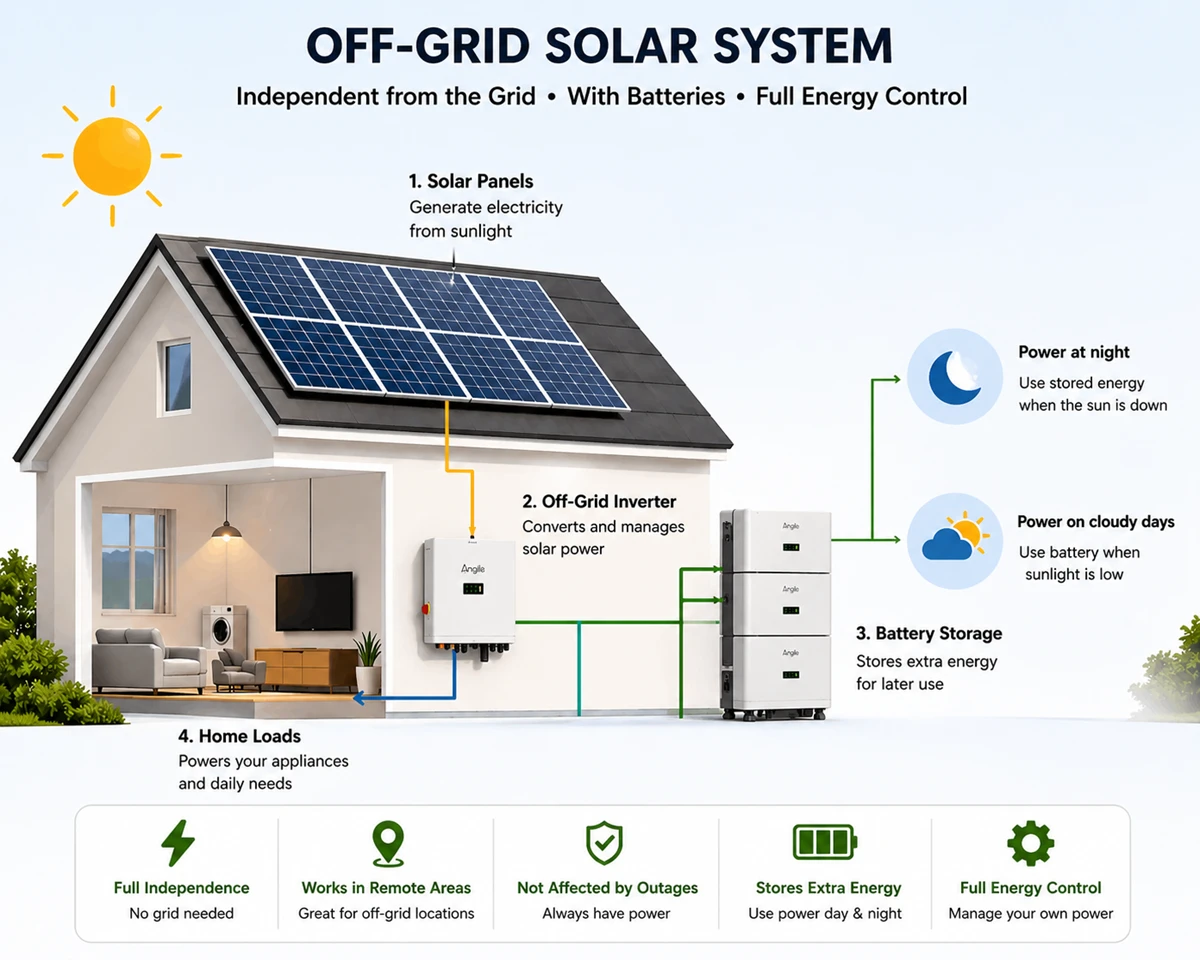
An off-grid solar system does not connect to the electricity grid. It works on its own and powers your home using solar energy and batteries.
How it works
-
Solar panels make electricity during the day
-
Extra energy is stored in batteries
-
Your home uses this stored power at night or on cloudy days
-
The system manages energy to make sure you have enough power
Pros
-
Full energy independence
-
Works well in remote or rural areas
-
Not affected by outages
-
Gives you full control over your electricity use
-
Useful where grid access is not available or unreliable
Cons
-
Higher cost due to batteries being required
-
Requires careful energy management
-
More complex to design and install compared to on-grid systems
Best for
-
Homes in remote areas with no grid connection
-
People who want full control of their own power
-
Users who want to live fully off the grid
-
Cabins, farms, or rural houses far from cities
-
Anyone ready to manage and plan their energy use carefully
3. Hybrid Solar System (Best of Both)
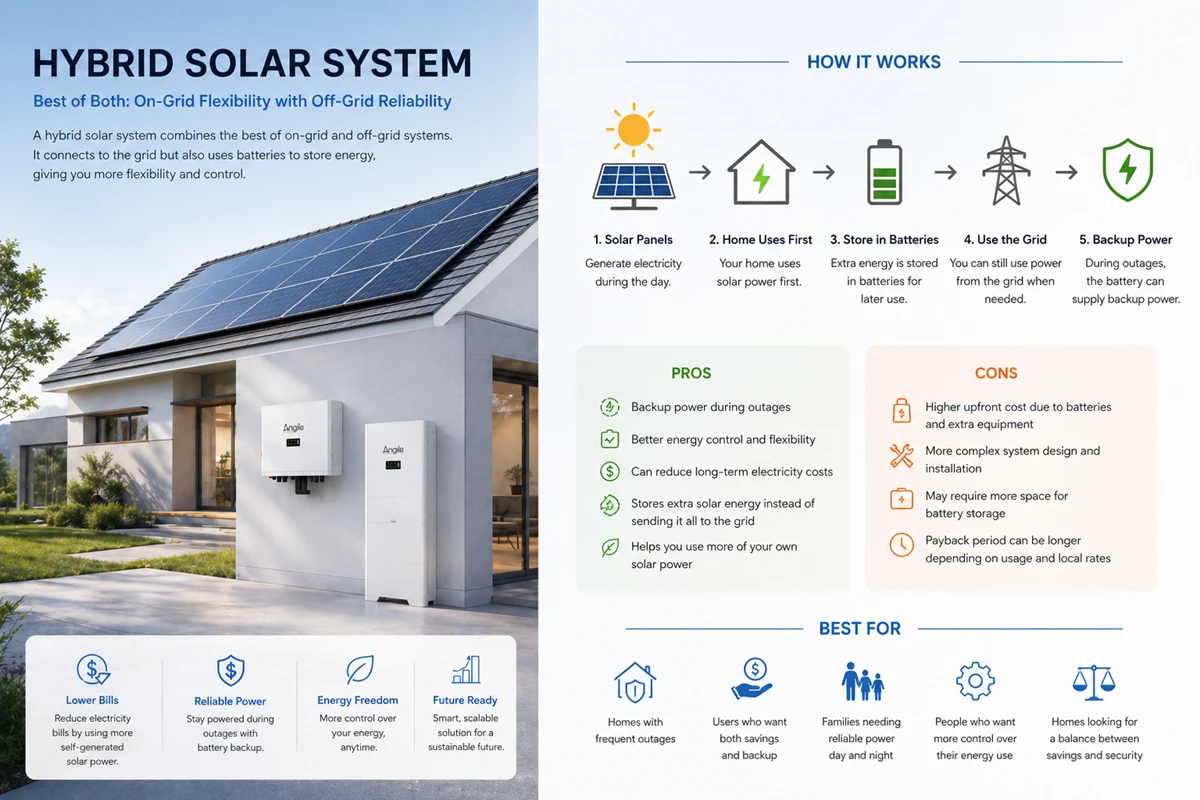
A hybrid solar system combines the best of on-grid and off-grid systems. It connects to the grid but also uses batteries to store energy, giving you more flexibility and control.
How it works
-
Solar panels generate electricity during the day
-
Your home uses solar power first
-
Extra energy is stored in batteries for later use
-
You can still use power from the grid when needed
-
During outages, the battery can supply backup power
Pros
-
Backup power during outages
-
Better energy control and flexibility
-
Can reduce long-term electricity costs
-
Stores extra solar energy instead of sending it all to the grid
-
Helps you use more of your own solar power
Cons
-
Higher upfront cost due to batteries and extra equipment
-
More complex system design and installation
-
May require more space for battery storage
-
Payback period can be longer depending on usage and local rates
Best for
-
Homes with frequent outages
-
Users who want both savings and backup
-
Families needing reliable power day and night
-
People who want more control over their energy use
-
Homes looking for a balance between savings and security
Key Differences at a Glance
| Feature |
On-Grid |
Off-Grid |
Hybrid |
| Grid connection |
Yes |
No |
Yes |
| Battery storage |
No |
Yes |
Yes |
| Cost |
Low |
High |
Medium–High |
| Outage Backup |
No |
Yes |
Yes |
How to Choose the Right System
Choosing the right solar system depends on your location, budget, and energy needs. Each system has its own strengths, so the best choice is the one that fits your daily life and long-term goals.
Choose on-grid if:
-
You have reliable electricity, want the lowest setup cost, and your main goal is to reduce your monthly power bills. It is simple, widely used, and works well in cities and urban areas.
Choose off-grid if:
-
You live in a remote area without grid access or if you want full independence from utility companies.
Choose hybrid if:
-
You want backup power during outages, more control over your energy use, and you are willing to invest more at the start for extra reliability and flexibility.
Where Angile Energy Fits In
Modern solar systems, especially hybrid ones, need smart coordination between inverters, batteries, and energy control. Good system design helps everything work smoothly and efficiently.
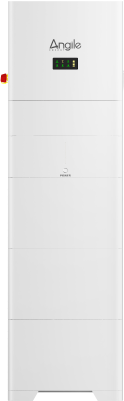
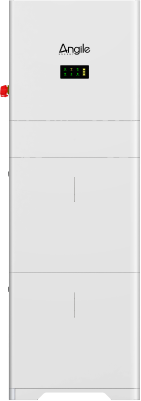
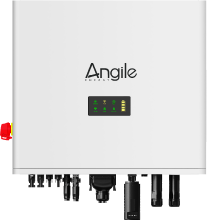
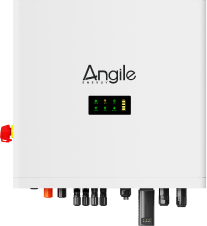
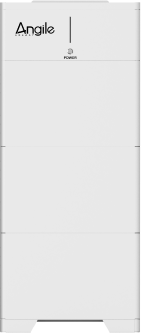
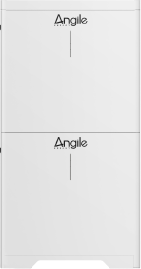
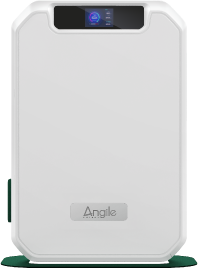
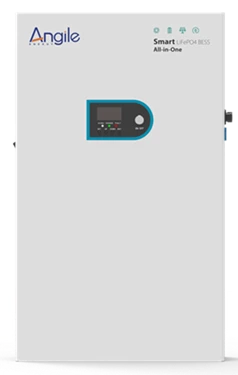
Companies like Angile Energy provide all-in-one hybrid systems, where the inverter, battery, and control system are built together. This makes installation easier and helps save space. They also offer scalable energy storage, so users can start small and expand later as their needs grow.
Another key feature is real-time monitoring, which lets users see how much energy they are producing and using. This helps improve daily energy use and avoid waste. These solutions are especially helpful for hybrid systems, where managing energy flow between solar, battery, and grid is very important for performance and long-term savings.