
Electric vehicles are a smart choice for everyday use. Compared with fuel-powered vehicles, they can reduce daily running costs and often require less maintenance. They also produce no tailpipe carbon emissions, making them a cleaner option for the environment. As more businesses and organizations switch to electric vehicles, small EV fleets are becoming more common. However, charging several EVs can create a new energy challenge. When multiple vehicles need to charge at the same time, electricity demand can rise quickly.
For a small EV fleet, such as company cars, delivery vans, service vehicles, or local transport vehicles, solar power combined with battery storage can provide a practical way to cover much of this demand. With the right system design and charging schedule, a business can move toward running its fleet on 100% solar energy.
The key is not simply installing more solar panels. The real solution is to combine solar generation, battery storage, EV charging, and smart energy management.
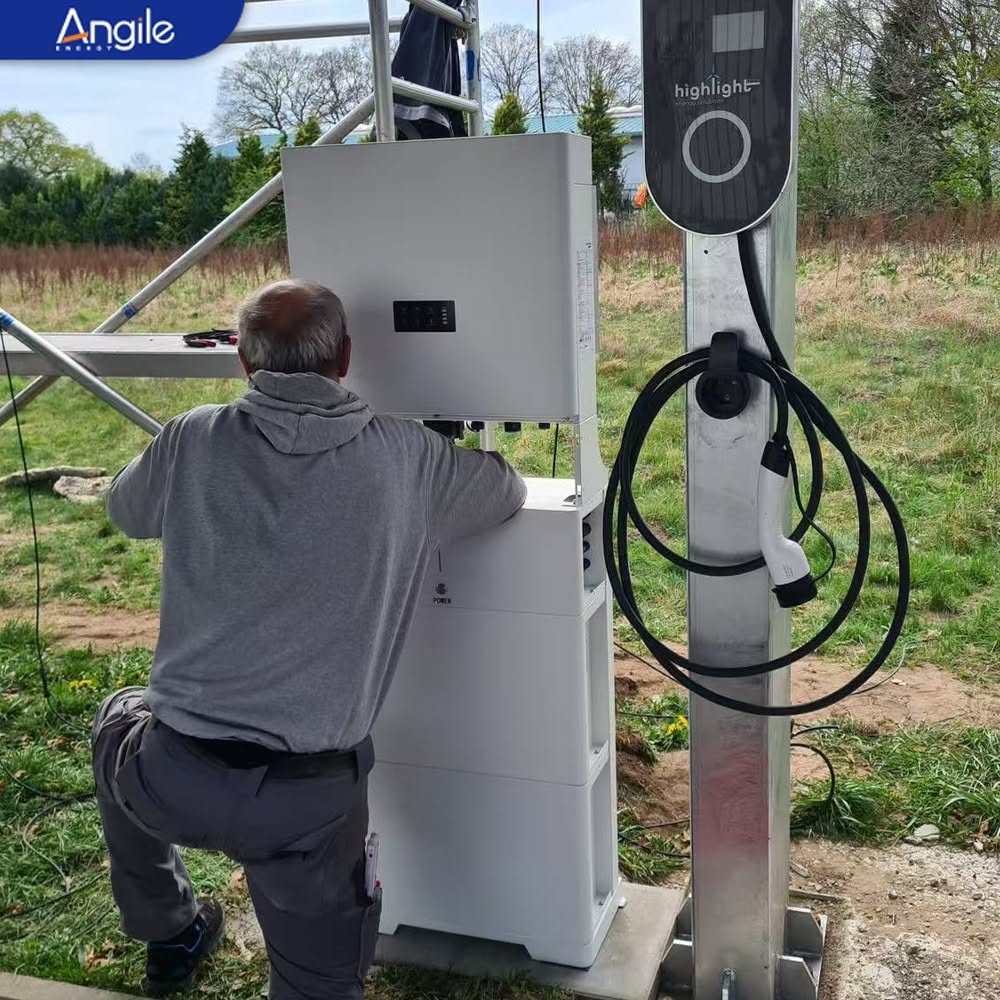
Before designing a solar-powered EV system, understand how much energy your fleet actually uses.
Record:
For example, a small fleet of five electric vehicles may not need to charge all five vehicles at full power every day. If some vehicles return to the depot in the afternoon while others are still working, charging can be spread across several hours.
This information helps determine the required solar capacity, battery size, and charging power.
Solar panels are the main energy source. During daylight hours, solar electricity can directly power EV chargers.
A simple energy flow looks like this:
Solar Panels → Hybrid Inverter → EV Chargers
When solar production is higher than the vehicles' charging demand, the extra electricity can be stored in a battery.
Solar Panels → Battery Storage → EV Chargers
This is important because EVs are not always charging when solar production is highest.
A fleet may return to the depot in the late afternoon, for example, just as solar production begins to fall. Without storage, the business may need to use grid electricity. With a battery, excess daytime solar energy can be saved and used later.
Battery storage is the link between solar generation and EV charging demand.
An energy storage system can capture excess solar power during the day and release it when vehicles need to charge. This can increase solar self-consumption and reduce dependence on the grid.
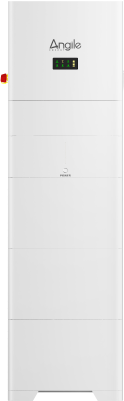
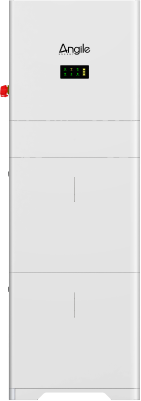
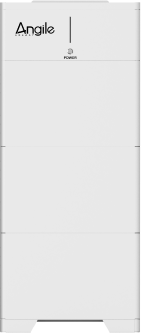
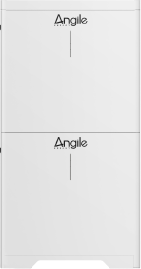
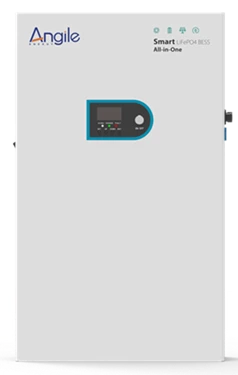
Angile Energy's all-in-one storage systems combine a hybrid inverter, battery packs, and energy management functions. Its ePowerCUBE AIOT three-phase system offers 5.12 kWh battery modules and can scale to as many as 36 modules, while a single PCS can control up to six battery packs, or 30 kWh.
For a small commercial fleet, this modular approach makes it easier to match storage capacity with actual charging demand rather than installing a fixed-size battery from the beginning.
The hybrid inverter is another important part of the system. It controls the flow of electricity between solar panels, batteries, EV chargers, the building, and the grid.
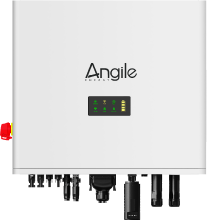
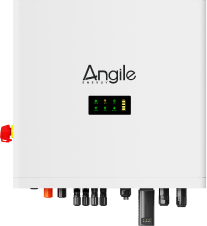
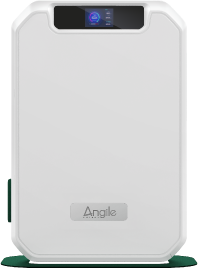
Angile Energy's hybrid inverter range includes single-phase models from 4 to 6 kW and three-phase models from 8 to 12 kW. The systems also support PV oversizing and provide real-time load monitoring.
For a small EV fleet, a three-phase system can be particularly useful where the site has three-phase electrical service and several vehicles need to charge.
The inverter can prioritize available solar power, charge the battery with excess generation, and discharge the battery when additional energy is required.
The simplest way to increase solar-powered charging is to change the charging schedule.
Instead of charging every vehicle immediately after it returns, fleet operators can use smart charging strategies.
For example:
This approach reduces the need to draw electricity from the grid during periods when solar production is low.
The more vehicles a business operates, the more important energy management becomes.
A smart energy management system can monitor solar production, battery state of charge, building consumption, and charging demand. It can then decide where available energy should go.
Angile Energy provides integrated HEMS and C&I energy storage solutions with 3S technology covering PCS, EMS, and BMS, along with real-time energy monitoring.
For a small fleet, the goal is simple: use solar first, store the surplus, and charge vehicles when renewable energy is available.
Running an EV fleet on 100% solar does not mean simply matching the total EV battery capacity with solar panel capacity.
The system needs to consider:
A business should therefore design the system around annual energy use rather than a single sunny day.
It is also important to understand that "100% solar" can mean different things. A business may aim for 100% renewable energy over the year, while still using the grid occasionally during extended periods of low solar production. Achieving complete off-grid operation requires much more solar generation and battery capacity.
A small EV fleet may grow over time. More vehicles can mean higher charging demand, so the energy system should have room to expand.
Angile Energy's residential and small commercial energy storage platforms use modular battery designs, allowing storage capacity to grow as energy needs increase. Its three-phase hybrid inverter platform is designed for home and small commercial applications.
This can be useful for businesses that start with a few EVs and gradually add more vehicles.
Running a small EV fleet on 100% solar power is not only about installing solar panels. It requires a complete energy strategy.
Solar panels produce the energy. Batteries store it. Hybrid inverters manage it. Smart charging determines when vehicles use it. Energy management keeps the whole system working efficiently.
For businesses with predictable fleet schedules, combining solar PV with battery storage and intelligent EV charging can significantly increase solar self-consumption and reduce reliance on grid electricity.
With modular storage and smart energy management, companies can also build the system gradually instead of trying to predict every future energy need on day one. Angile Energy's integrated energy storage solutions are designed around this approach, connecting solar generation, storage, loads, and energy management in one system.
The result is a cleaner and more controllable way to power a small EV fleet—using the sun as the primary energy source whenever possible.