
Depth of Discharge (DoD) is the percentage of a battery's stored energy that has been used.
It is the opposite of State of Charge (SoC), which shows how much energy remains in the battery.
A simple relationship is:
DoD + SoC = 100%
For example, if your battery still has 30% energy left (30% SoC), then it has reached 70% DoD.
Imagine you have a 10 kWh residential battery.
The higher the DoD, the more of the battery's stored energy has been used.
The calculation is straightforward:
DoD (%) = (Energy Used ÷ Total Battery Capacity) × 100
For example:
DoD = (12 ÷ 15) × 100 = 80%
This means 80% of the battery capacity has been discharged, while 20% remains.
Many people only compare battery capacity, but usable energy is often more important.
Consider two batteries with the same nominal capacity.
| Battery | Capacity | DoD | Usable Energy |
| Battery A | 10 kWh | 80% | 8 kWh |
| Battery B | 10 kWh | 95% | 9.5 kWh |
Although both batteries are rated at 10 kWh, Battery B provides more usable energy in daily operation.
This is why DoD should always be considered together with battery capacity.
Every rechargeable battery has a limited number of charge and discharge cycles.
In general, deeper discharge puts more stress on the battery, which can reduce its total cycle life. The relationship depends on battery chemistry, battery design, and the manufacturer's battery management system (BMS).
For example:
Fortunately, most residential energy storage systems include an intelligent BMS that automatically protects the battery from harmful over-discharge.
Different battery chemistries have different recommended discharge depths.
| Battery Type | Typical Recommended DoD |
| Lead-acid | Around 50% |
| AGM/Gel | 50–60% |
| Lithium-ion (NMC) | 80–90% |
| LiFePO₄ (LFP) | 90–100% (depending on manufacturer) |
Lead-acid batteries experience faster wear if they are deeply discharged regularly. In contrast, most modern LiFePO₄ batteries are designed to safely provide much higher usable capacity while maintaining long cycle life.
There is no single setting that fits every home.
The ideal DoD depends on several factors:
For many grid-connected homes, using around 80–90% DoD offers a good balance between available energy and battery longevity. Homes that rely heavily on battery storage during outages or off-grid operation may choose deeper daily discharge if supported by the battery warranty.
Instead of aiming for the deepest possible discharge, it is generally better to follow the battery manufacturer's recommended operating range.
Depth of Discharge is only one part of battery performance.
Other important factors include:
Battery Chemistry
LiFePO₄ batteries typically provide higher usable capacity and longer cycle life than lead-acid batteries.
Temperature
Very high or very low temperatures can reduce battery efficiency and accelerate aging. Most batteries perform best in moderate operating temperatures.
Battery Management System (BMS)
A high-quality BMS continuously monitors voltage, temperature, and charging conditions to protect the battery and improve long-term reliability.
Charging and Discharging Rate
Frequent high-power charging or discharging generates additional heat and may increase battery wear over time.
You can help your battery last longer by following a few simple practices:
A well-designed energy storage system automatically manages many of these settings, making daily operation simple for homeowners.
When comparing residential battery systems, avoid focusing only on total capacity.
Also consider:
These factors together determine how much energy your system can deliver over many years of operation.
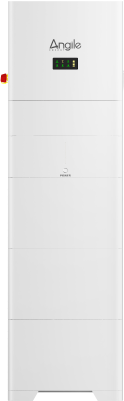
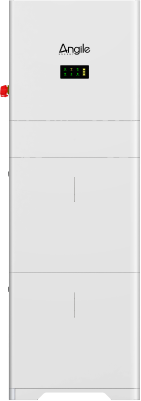
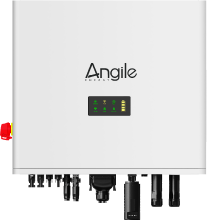
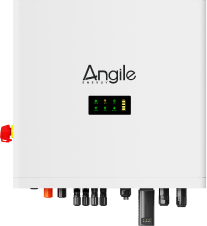
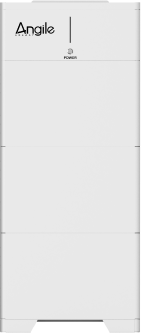
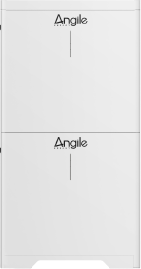
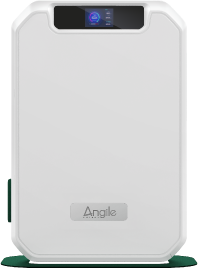
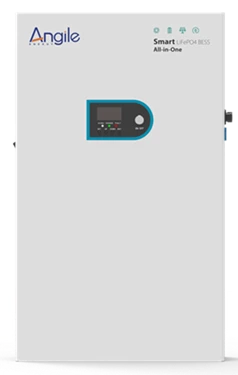
For example, Angile Energy residential energy storage solutions combine high-efficiency hybrid inverters, intelligent BMS, and stackable LiFePO₄ battery packs. The integrated energy management system helps optimize charging and discharging automatically, making it easier to maximize both daily energy use and long-term battery performance.
Is 100% DoD bad for a battery?
Not necessarily. Some modern LiFePO₄ batteries are designed and warranted for very deep daily discharge, while others reserve a small portion of capacity to protect battery health. Always follow the manufacturer's specifications rather than assuming all batteries can safely operate at 100% DoD.
Is DoD the same as State of Charge?
No.
Together they always equal 100%.
Does a higher DoD mean a better battery?
Not by itself. A higher DoD means more usable energy, but battery quality also depends on cycle life, safety, battery chemistry, warranty, and the battery management system.
Depth of Discharge is one of the easiest battery specifications to understand, yet it has a major impact on everyday performance.
A battery with the right DoD can provide more usable electricity, improve the value of your solar investment, and support reliable backup power when you need it most. However, DoD should never be evaluated on its own. Looking at battery chemistry, cycle life, the BMS, and warranty together will give you a much clearer picture of long-term performance.
When selecting a residential energy storage system, choosing a high-quality LiFePO₄ battery with intelligent energy management and a manufacturer-backed warranty can help ensure dependable operation for many years.