
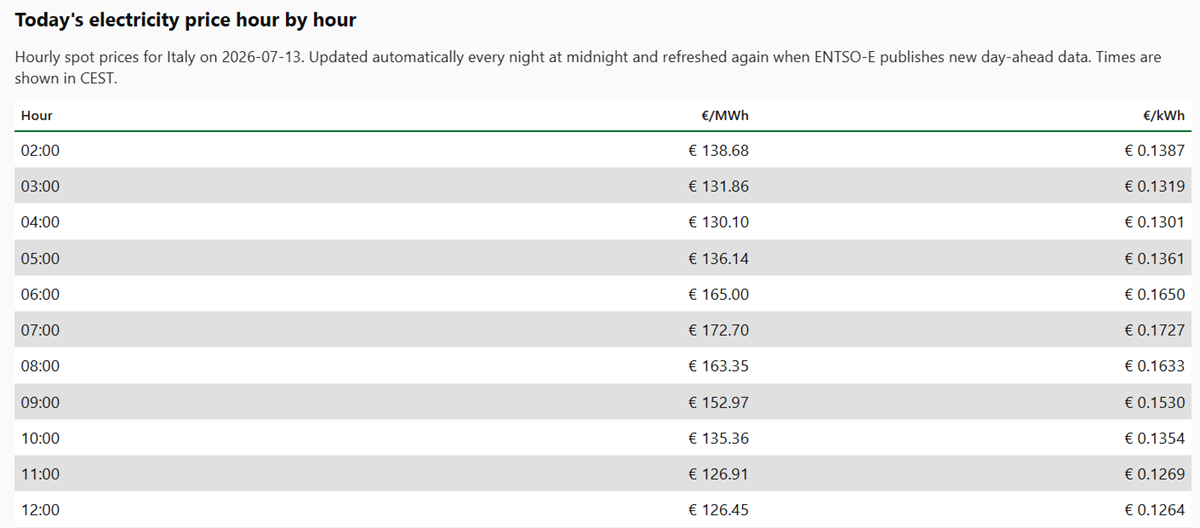
Electricity prices don't always stay the same throughout the day. In many countries, electricity costs change depending on demand, giving homeowners the chance to reduce their bills simply by using more power during cheaper hours. For example, Italy's day-ahead electricity market shows clear hourly price differences. On July 13, 2026, electricity prices ranged from around €0.1264/kWh at 12:00 to €0.1727/kWh at 07:00, demonstrating how shifting electricity use to lower-priced hours can help reduce energy costs.
If you've ever asked "when is electricity cheapest?", the answer depends on your electricity tariff, your utility provider, and where you live. However, many households with time-of-use (TOU) tariffs pay lower rates during off-peak hours, which are often overnight when demand is lower.
As electricity pricing becomes smarter and renewable energy grows, understanding when electricity is cheapest is becoming more valuable than ever. Combined with a solar energy storage system, homeowners can reduce grid purchases, lower electricity bills, and gain greater energy independence.
Electricity cannot be stored on the power grid in large quantities. Power generation must closely match demand every minute of the day.
Demand changes throughout the day:
When demand rises, electricity becomes more expensive to supply. During periods of lower demand, utilities often reduce prices to encourage electricity use. This pricing structure helps balance the grid while making better use of available generation capacity.
Although schedules vary by country and utility, electricity pricing generally falls into three periods.
| Time Period | Typical Hours | Electricity Price |
|---|---|---|
| Peak | Late afternoon to evening | Highest |
| Shoulder (where available) | Morning or early afternoon | Medium |
| Off-Peak | Late evening through early morning | Lowest |
For many time-of-use tariffs, off-peak electricity is available overnight, often between approximately 10:00 PM and 8:00 AM, although exact hours differ by supplier and tariff.
Always check your utility's tariff because the exact schedule may change by region or season.
Off-peak pricing benefits households that can move flexible electricity use away from busy daytime hours.
Examples include:
The more electricity you shift into off-peak periods, the greater your potential savings.
No.
Whether electricity is cheaper at night depends entirely on your electricity plan. Generally, there are two common pricing models:
With a standard tariff, every kilowatt-hour (kWh) costs the same regardless of the time of day. Running appliances at midnight costs the same as running them in the afternoon.
Time-of-use tariffs charge different prices depending on when electricity is consumed. These plans reward customers who can move energy use away from peak demand periods. However, daytime electricity may be more expensive than on a flat-rate plan, so they work best for households that can shift a meaningful amount of consumption to off-peak hours.
Changing appliance schedules can reduce electricity costs, but a home battery can increase savings even further.
A residential battery stores surplus solar energy generated during the day instead of exporting all of it to the grid. That stored energy can then power your home during expensive evening hours.
Depending on your electricity plan, a battery can also charge from the grid during low-cost overnight periods and discharge when electricity prices are higher.
This allows homeowners to:
As dynamic electricity pricing becomes more common, battery storage offers greater flexibility and control over when electricity is purchased and used.
A battery is even more effective when paired with an intelligent energy management system.
Modern home energy management systems (HEMS) automatically monitor:
The system can prioritize using stored solar energy during expensive periods and recharge the battery when electricity costs are lower, reducing the need for manual adjustments.
For homeowners looking to maximize off-peak electricity savings, an integrated solar-plus-storage solution offers a practical long-term investment.
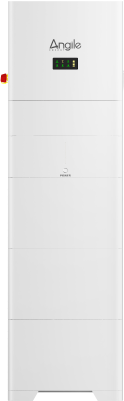
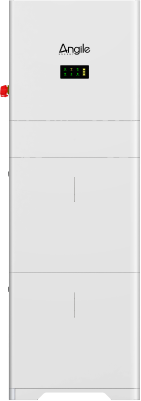
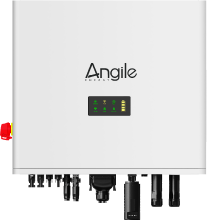
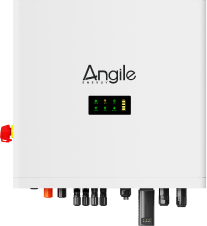
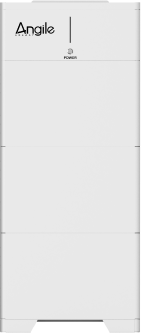
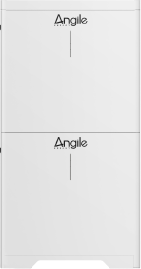
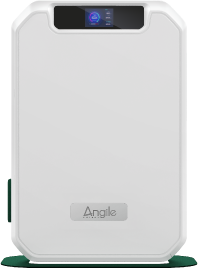
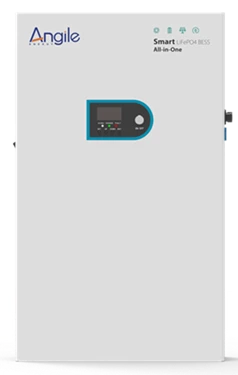
Angile Energy provides complete residential energy storage solutions that combine high-efficiency hybrid inverters, stackable battery systems, and intelligent energy management. The company's product portfolio includes single-phase and three-phase hybrid inverters, available in 4–6 kW and 8–12 kW models respectively, designed to work with Angile Energy's own battery systems for optimized performance.
High-efficiency hybrid inverter technology | Stackable high-voltage and low-voltage battery options | Integrated PCS, EMS, and BMS technologies
Key advantages include:
By storing excess solar power and managing when electricity is imported from the grid, homeowners can reduce dependence on expensive peak-rate electricity while improving overall energy efficiency.
If your utility offers off-peak pricing, consider these simple ways to save:
Even small changes in when electricity is used can lead to noticeable savings over time.
So, when is electricity cheapest?
For many households on time-of-use tariffs, electricity is typically cheapest during overnight off-peak hours when overall demand is lower. However, the exact schedule depends on your electricity provider and tariff.
Simply shifting appliance use can reduce electricity costs, but combining off-peak pricing with solar panels, battery storage, and intelligent energy management delivers even greater savings. As more utilities introduce flexible electricity pricing, integrated home energy storage systems are becoming an increasingly effective way to lower bills, improve energy independence, and make better use of renewable energy.